Berat, Albania

Vila Vrioni

Where Four Centuries of Legacy Are Written in Stone
Late Ottoman Manor  ·  UNESCO World Heritage City  ·  Protected Cultural Monument
Discover the Story
Scroll

A Manor in the City of a Thousand Windows

In the heart of Berat — Albania's UNESCO World Heritage city and one of Europe's last undiscovered corners — stands the ancestral compound of the Vrioni family, one of the most distinguished aristocratic dynasties in Albanian history.

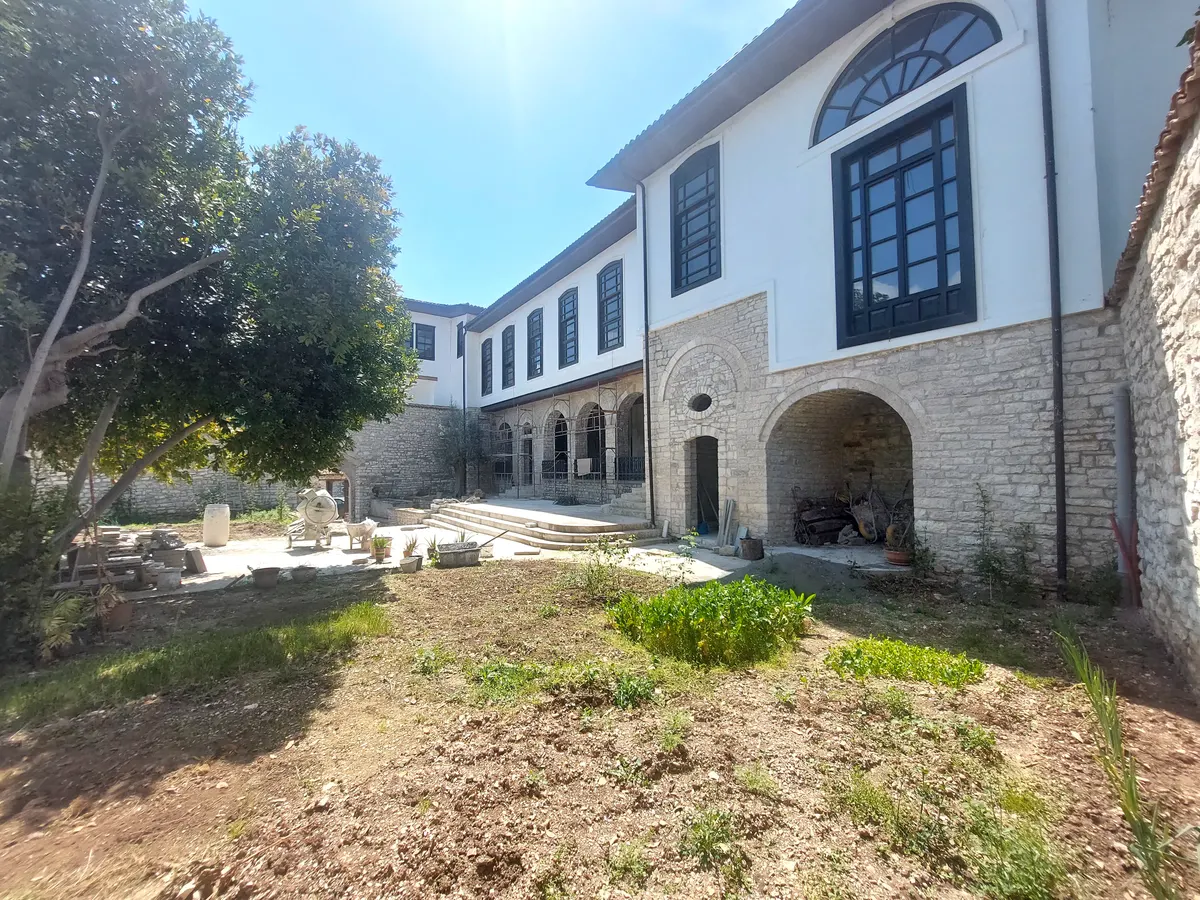
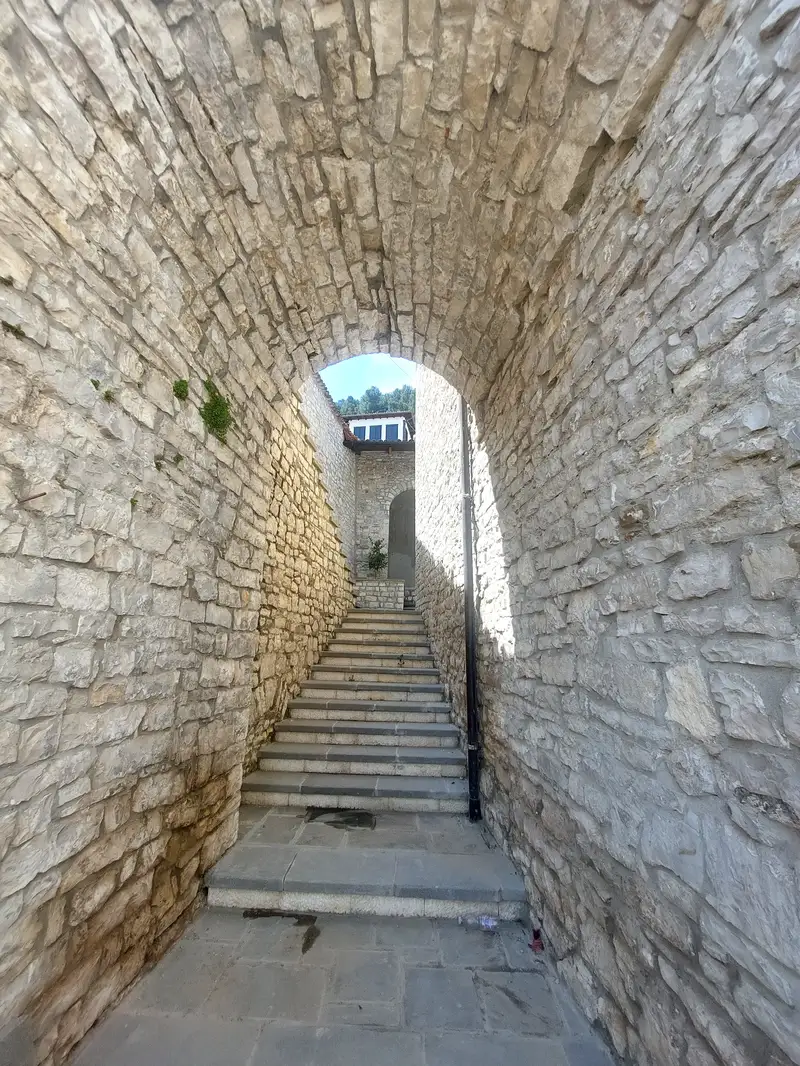
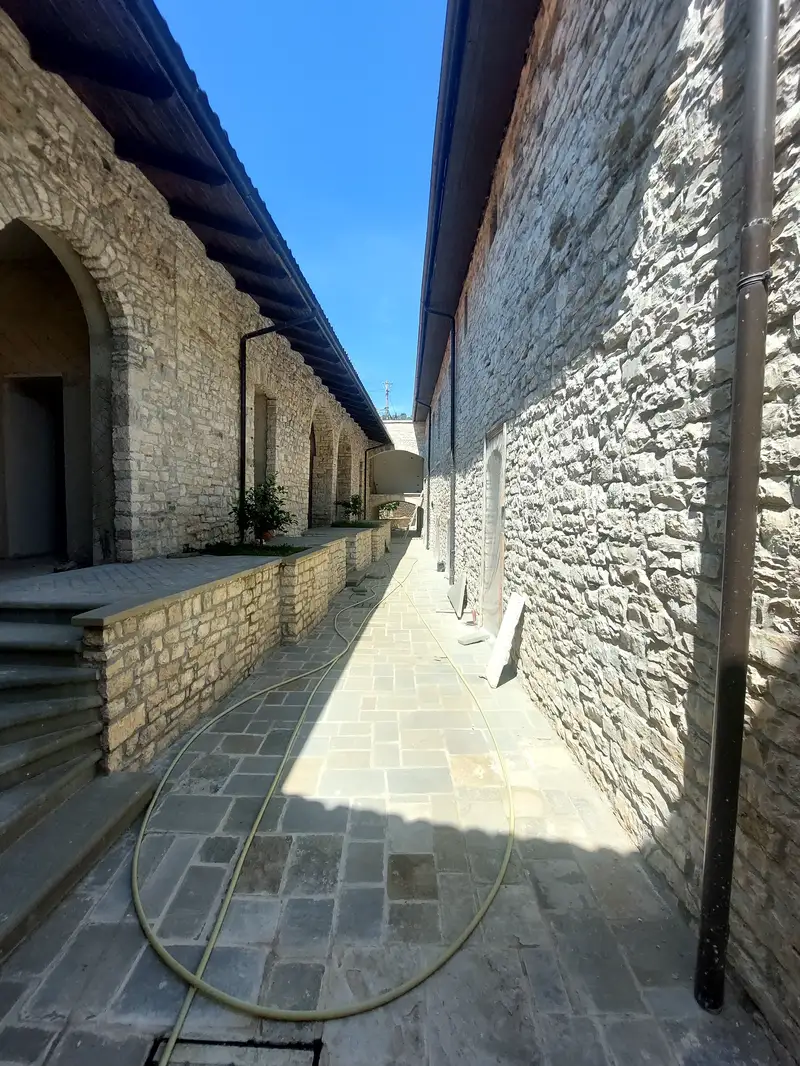
Officially designated as a protected cultural monument under the name Objekti i Yzedin Galip Pashë Vrioni, the compound represents Albania's finest surviving example of late Ottoman residential architecture. Its two-storey rendered main building, vaulted stone outbuildings, stone-paved courtyard, and intricately coffered wooden ceilings speak to a world of wealth, civic pride, and refined craftsmanship that few properties in the region can match.

Confiscated during the communist dictatorship and left to decay for decades, the villa has been the subject of a meticulous, museum-quality restoration since 2021. Today, a descendant of Izedin Vrioni is returning the compound to its original splendour — stone by stone, timber by timber.

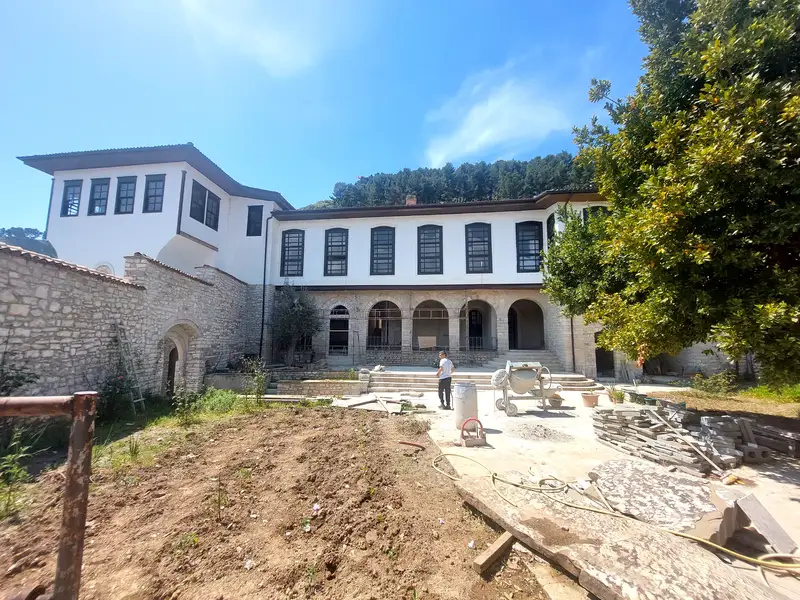
Vila Vrioni front facade, April 2025

The Vrioni Family

From Ottoman pashas to Albanian nation-builders — the Vrioni story spans four centuries of Albanian history, from a village near Berat to the halls of power, and back to ruin and redemption.

The Vrioni (Ottoman Turkish: Viryon-zâdeler) were among Albania's largest landowning families, their origins traceable to the village of Virjon near Berat. By the mid-17th century they appear as timarli sipahi in the Janina Vilayet; a 1685 fountain inscription bears the family genealogy. Over generations the family branched into the Berat line (bearing the title bey) and the Fier line (bearing the title pasha). The sanjak and city of Berat was dominated by the Vrioni family throughout the 19th century.

Their influence bridged Ottoman administration, Albanian patriotism, the Declaration of Independence of 1912, and the formation of the modern Albanian state — until the communist takeover of 1944 targeted them as class enemies, confiscated their estates, demolished their palaces, and persecuted family members with extraordinary brutality.

Izedin Vrioni — Mayor of Berat

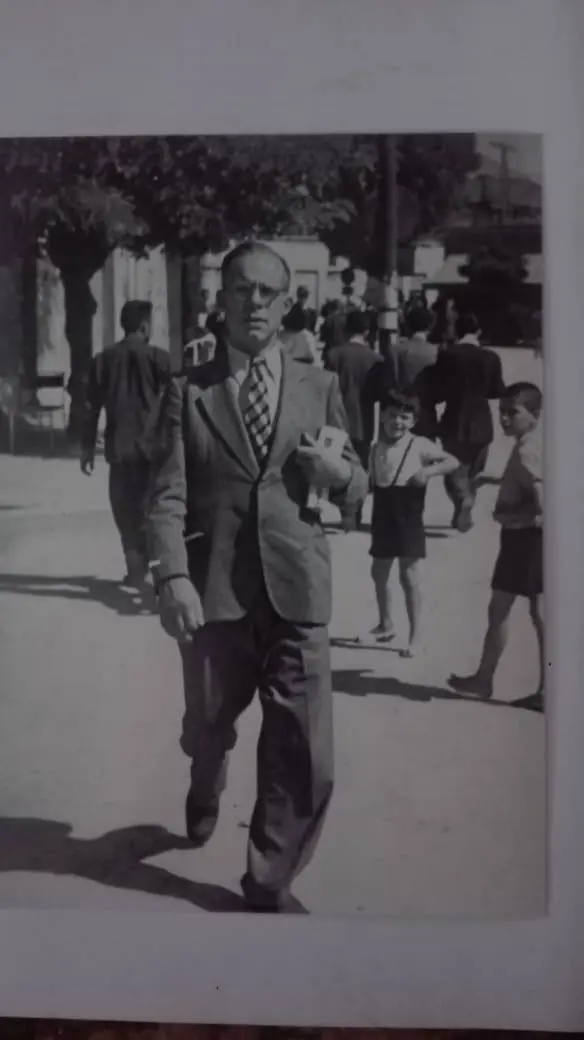
Izedin Vrioni (also written Yzedin Bej Vrioni) was the son of Galip Pasha Vrioni of the Fier branch and Nasip hanëm Vlora, and brother of Qemal Bey Vrioni. He is the family member most closely associated with this property — an official 2016 Albanian heritage decision names the protected building Objekti i Yzedin Galip Pashë Vrioni.

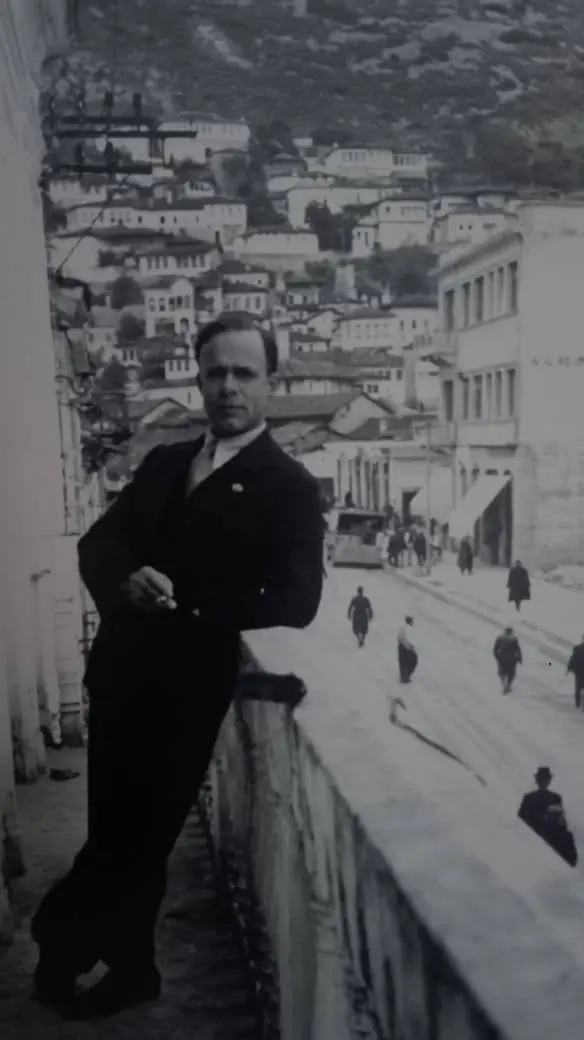
He served as one of Berat's most prominent mayors across the formative decades of Albanian independence, repeatedly called upon for his leadership in a politically volatile era. He also commanded the Berat forces during the Vlora War of June–August 1920 — the decisive confrontation between Albanian nationalists and the Kingdom of Italy, whose Albanian victory compelled Italy to relinquish Vlorë and formally recognise Albania's 1913 borders.

Izedin Vrioni on a balcony overlooking Berat, circa 1930s
Izedin Vrioni overlooking Berat, c. 1930s
Izedin Vrioni, Mayor of Berat
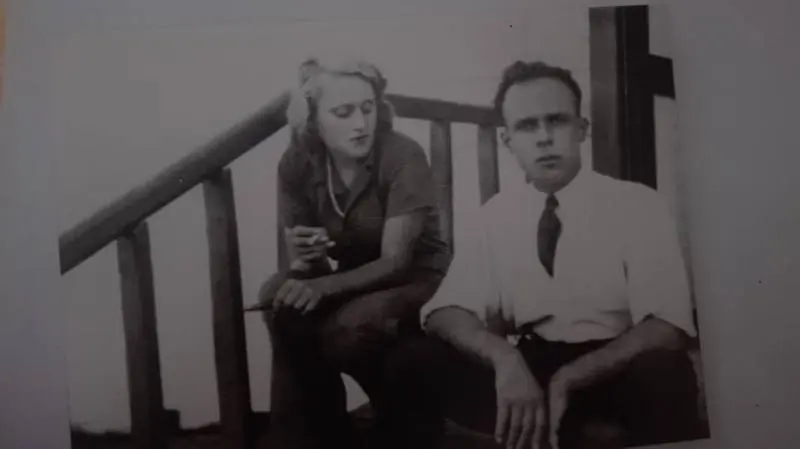
Yzedin and Xhemal Vrioni
Mayoral Term Historical Context
1922Post-independence consolidation period
1924Period of political transition in Albania
1925–1928Establishment of the Albanian Republic, then Kingdom
1935Kingdom of Albania under King Zog I
1937Final pre-war term; confirmed also in 1940 census records

Notable Members of the Vrioni Family

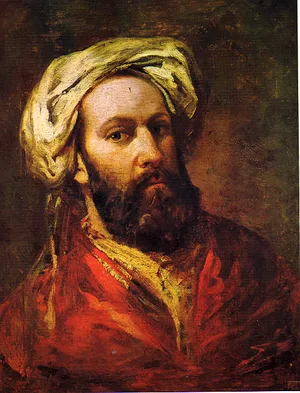
Oil portrait of Omer Pasha Vrioni I, Ottoman general
d. 1828
Omer Pasha Vrioni I

Renowned Ottoman general; campaigned against Napoleon in Egypt; received the Pashalik of Berat in 1821; checked during the Greek War of Independence at the Battle of Gravia Inn.

1842–1895
Mehmet Ali Pasha Vrioni

Vice-President of the League of Prizren (1878); Albanian patriot who traveled to Paris, Rome, Vienna and Berlin to press Albanian national demands at the Congress of Berlin. Father of Prime Minister Iliaz Vrioni.

1882–1932
Iliaz Bey Vrioni

Mayor of Berat (1908–1911); signatory of the Albanian Declaration of Independence, 28 November 1912; three-time Prime Minister of Albania; five-time Foreign Minister. Grand Officier de la Légion d'honneur. Died in Paris, 1932.

1870–1947
Sami Bey Vrioni

Signatory of the Declaration of Independence (1912); delegate to the Durrës Congress (1918). Arrested by the communist regime in 1944; died under torture in 1947.

1881–1944
Hysen Bey Vrioni

Minister of Justice and twice Minister of Foreign Affairs in the interwar period; signed the First Pact of Tirana (1926). Personally held 7,500 hectares in southern Myzeqe.

1916–2001
Jusuf Vrioni

Son of Prime Minister Iliaz; the renowned French translator of Ismail Kadare. Arrested 1947, sentenced to 15 years hard labour. After the fall of communism: appointed Albania's Ambassador to UNESCO.

Under Communist Rule, 1944–1990

After the communist takeover in 1944 the Vrioni family was branded "class enemies" — feudal bloodsuckers, enemies of the people. Their estates were nationalised under a series of confiscation laws; their historic Berat sarays were demolished in 1947. For forty years the Vrioni name was used as the archetypal symbol of oppression in Albanian school textbooks — a deliberate, systematic erasure of their historical contributions.

  • Izedin Bej Vrioni — beaten to death in the local police station, 1947. His remains have never been found.
  • Sami Bej Vrioni — died under torture, 1947.
  • Qemal Bej Vrioni — sentenced to life imprisonment by the Special Court (1945); died in Burrel prison, c. 1950–1952.
  • Jusuf Vrioni — sentenced to 15 years hard labour; later emerged as Albania's greatest literary translator.
  • Irfan Bej Vrioni — sentenced to life imprisonment.
  • Kahreman Pasha Vrioni — died under unclear circumstances, 1955.
  • Nermin Vrioni — died homeless, suffering from dementia.
  • Iliaz Vrioni's remains — exhumed from Paris in 1946 and thrown into the Osum River in Berat. He has no grave.

In 2009 the European Court of Human Rights ruled against Albania in Vrioni and Others v. Albania and Italy (App. nos. 35720/04 & 42832/06), finding violations of the right to property and fair trial, with compensation of approximately €1.9 million awarded to the heirs.

Nevin Vrioni

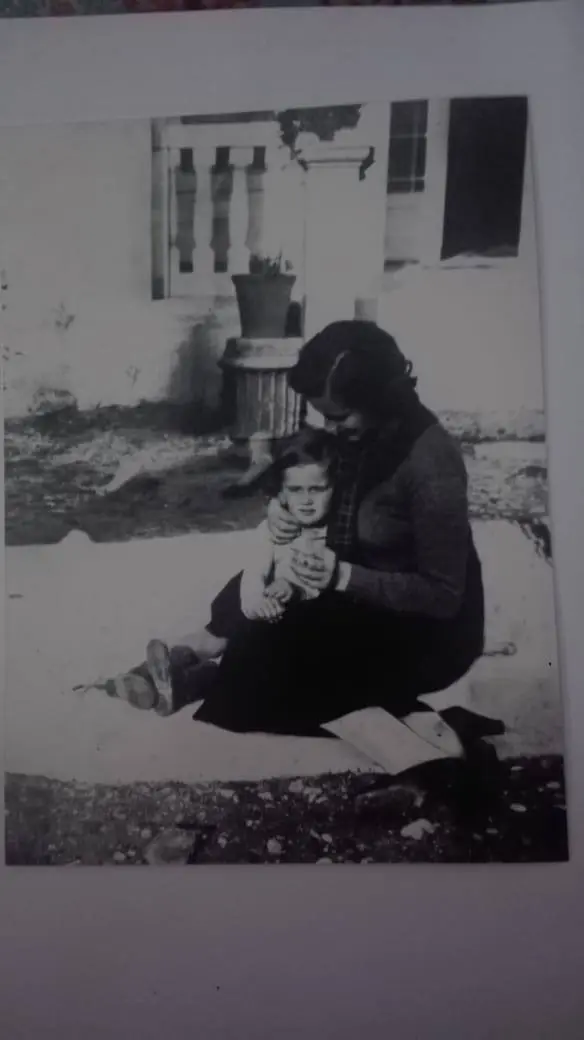
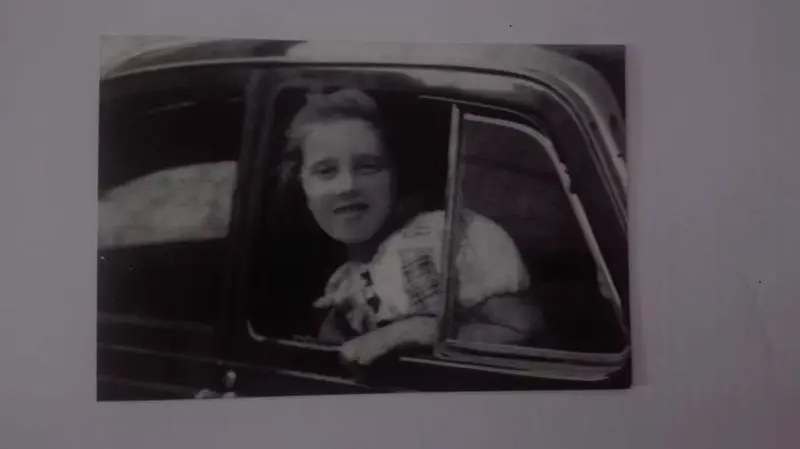
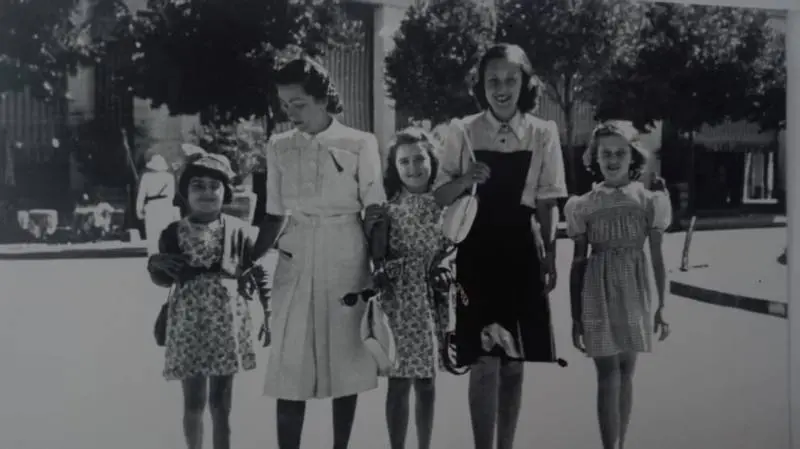
Nevin Vrioni was born in this house. She lived within these walls until she was thirteen years old, when the communist regime confiscated everything — the villa, the estates, the name itself. Today, her grandchild is restoring Vila Vrioni — not just as a building, but as a promise kept across generations.

Nevin with her mother in the courtyard of Vila Vrioni
Nevin with her mother, in the courtyard of Vila Vrioni
Young Nevin Vrioni
Young Nevin Vrioni
Xhemal and Nevin with friends in Berat

Restoration of Vila Vrioni

A meticulous, ongoing effort to return this heritage building to its former dignity — from the first emergency interventions in 2018 to the present day.

2012
Survey & Assessment

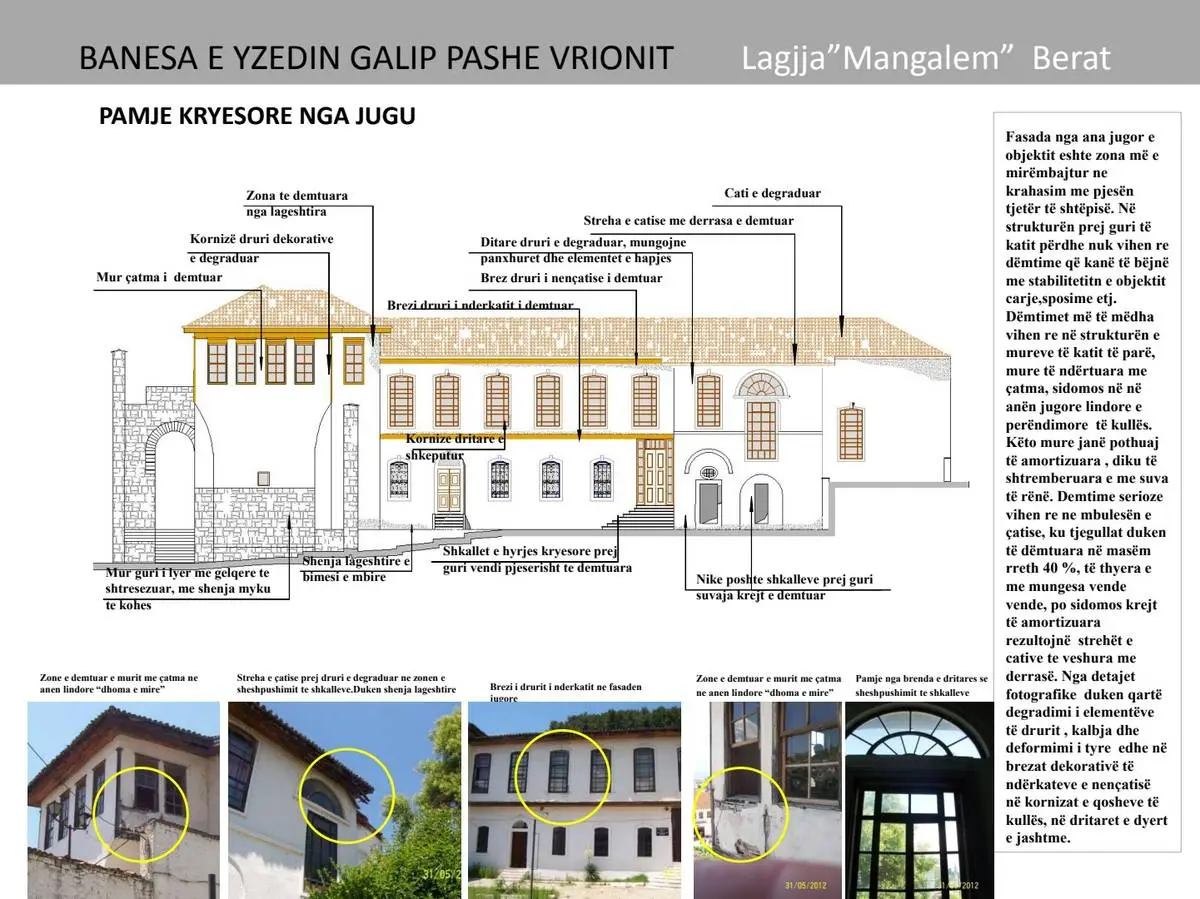
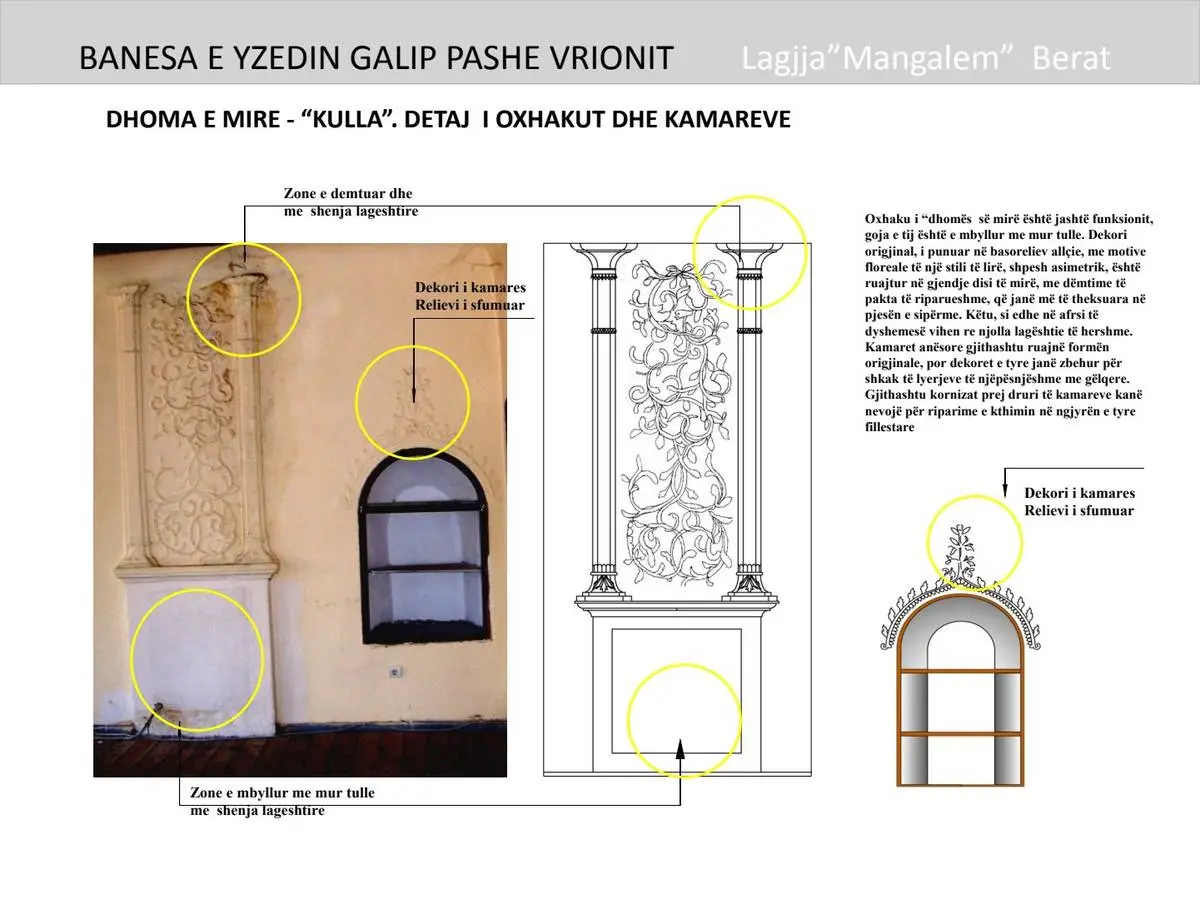
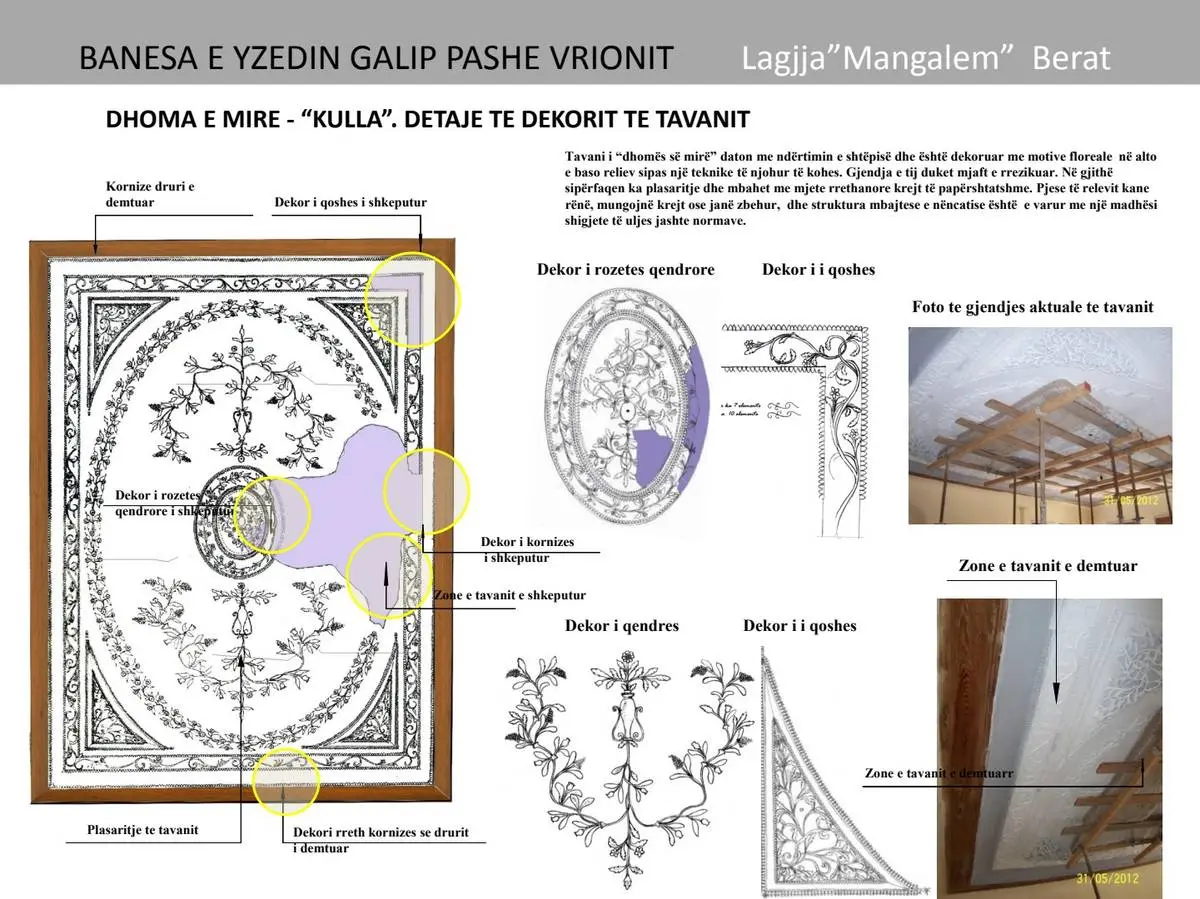
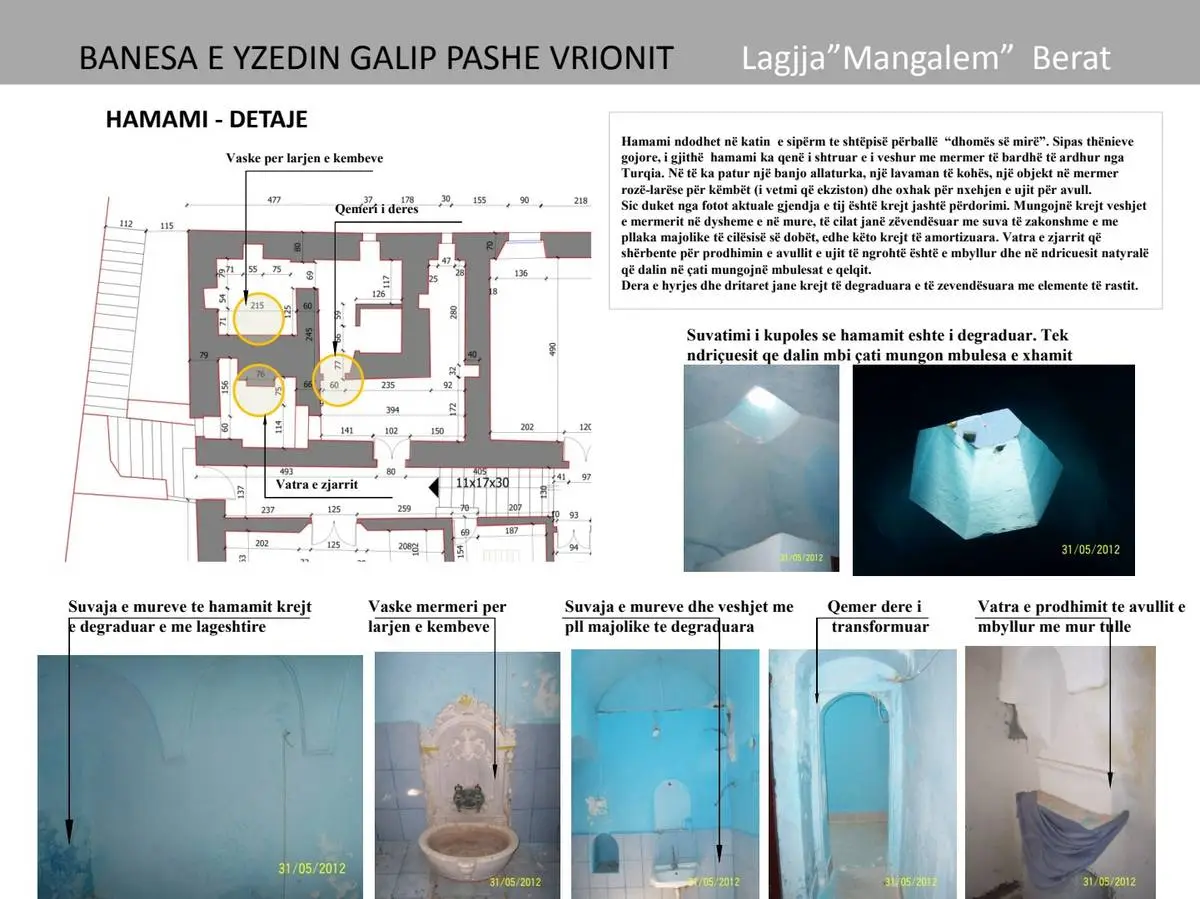
A detailed architectural survey commissioned by the Institute of Cultural Monuments documents every facade, floor plan, and decorative element of the compound — from the Ottoman-era hamami with its domed ceiling to the bas-relief carvings of the dhoma e mire (finest room). The survey reveals the full scale of damage after decades of neglect and misuse under the communist regime, and forms the basis for the restoration masterplan.

South facade architectural survey showing pre-restoration condition Dhoma e Mire — decorative fireplace niche with bas-relief carvings Ornate ceiling plasterwork with floral motifs and technical restoration drawings Ottoman hamami with domed ceiling and blue tile details
2018
Roof Reconstruction — Emergency Stabilisation

Restoration begins with the most urgent priority: securing the building itself. The original roof structure, weakened by decades of neglect under and after the communist regime, is fully reconstructed to halt further water damage and structural deterioration. With the roof sealed and the building protected from the elements, the foundation is laid for the comprehensive restoration to follow — work that has continued without interruption to the present day.

2021
July — Early Phase

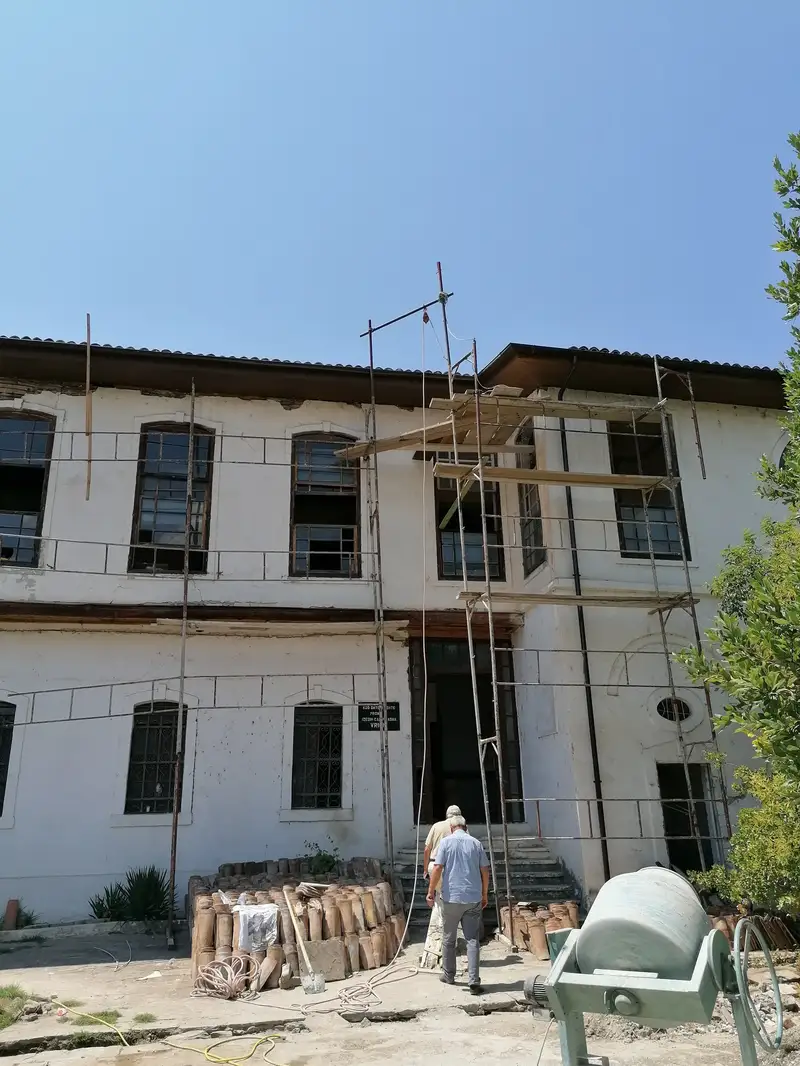
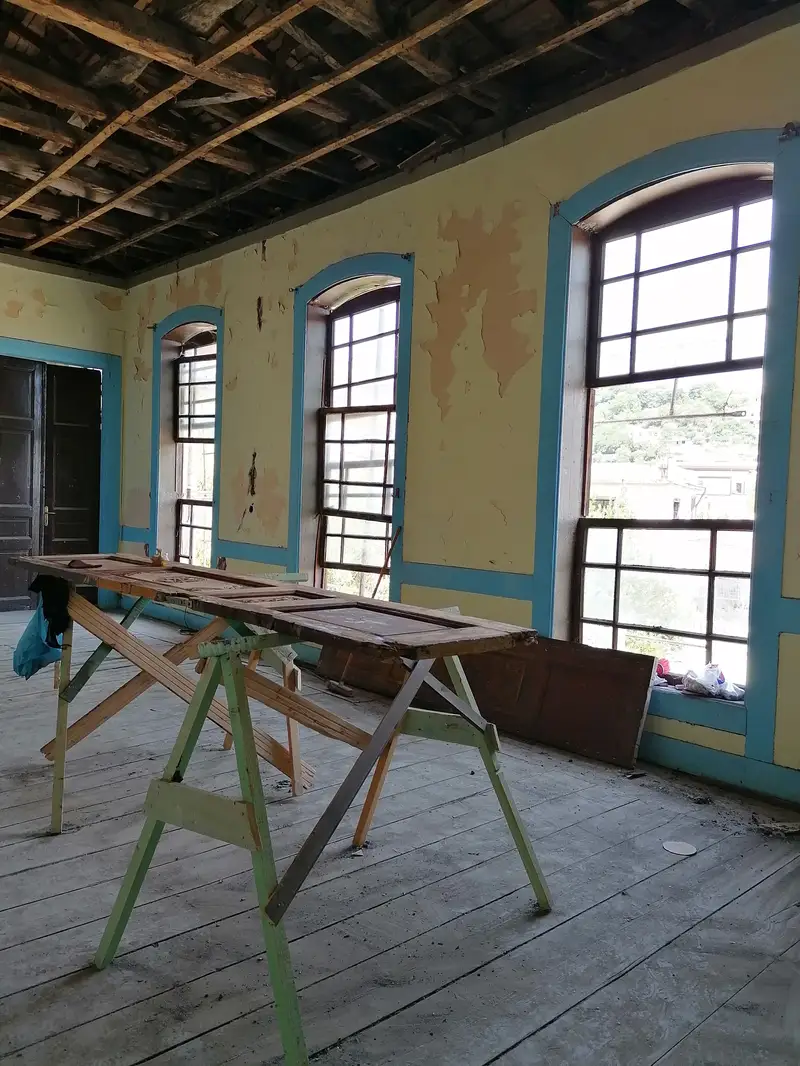
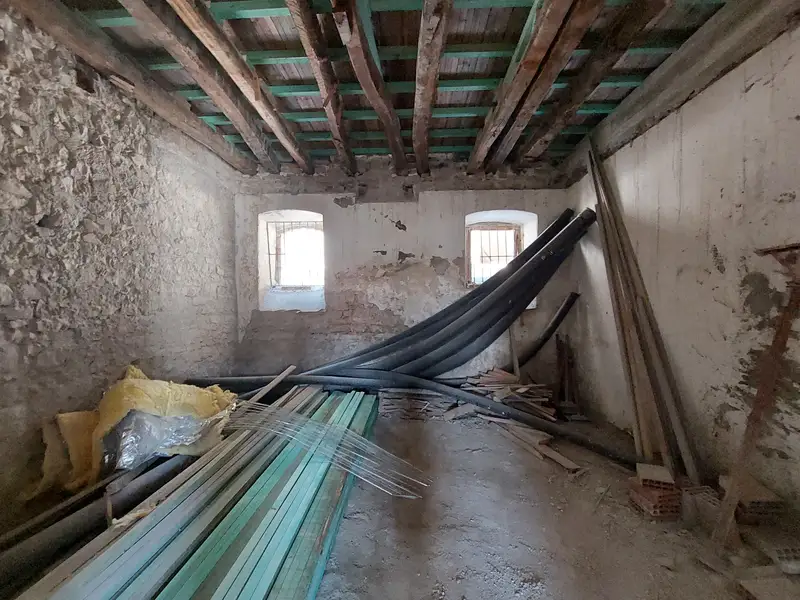
Restoration begins in earnest. Scaffolding envelops the main facade as structural assessment is completed and the heritage designation placard is mounted. Inside, decades of communist-era paint are painstakingly stripped from the walls — each layer a stratum of different eras, the geological record of a building put to many involuntary uses. The original lime plaster begins to re-emerge.

Exterior 2021 Interior room 2021
2022
July — Structural Phase

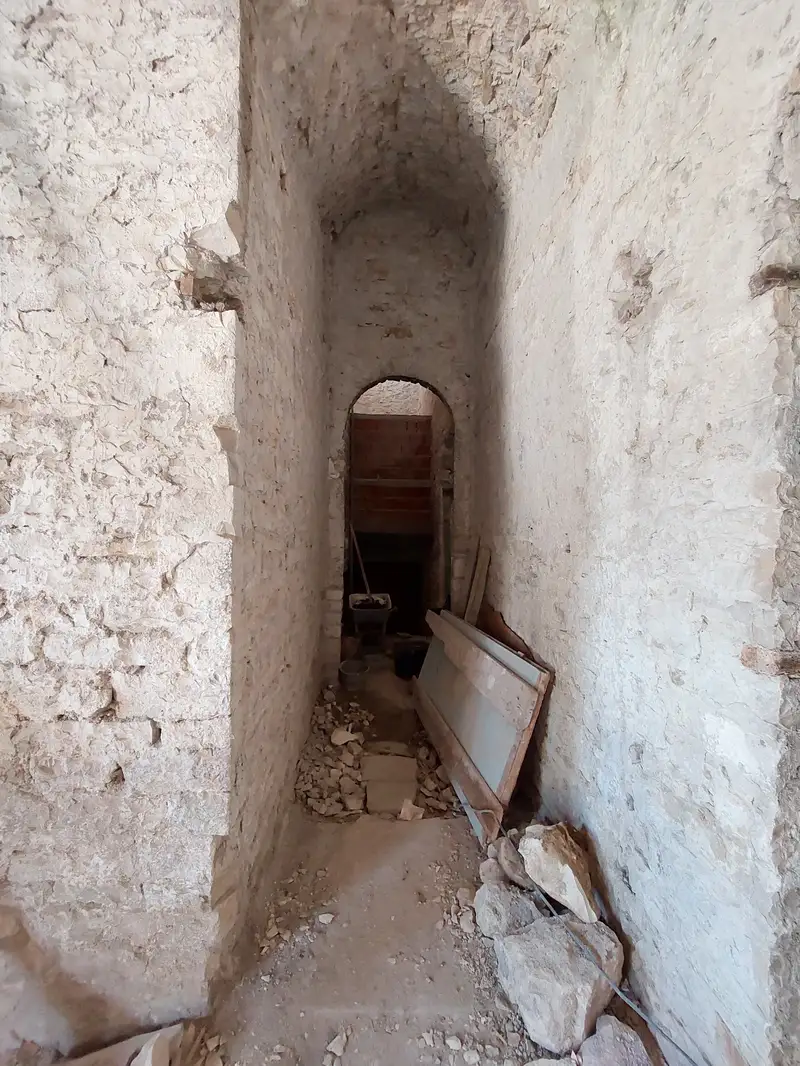
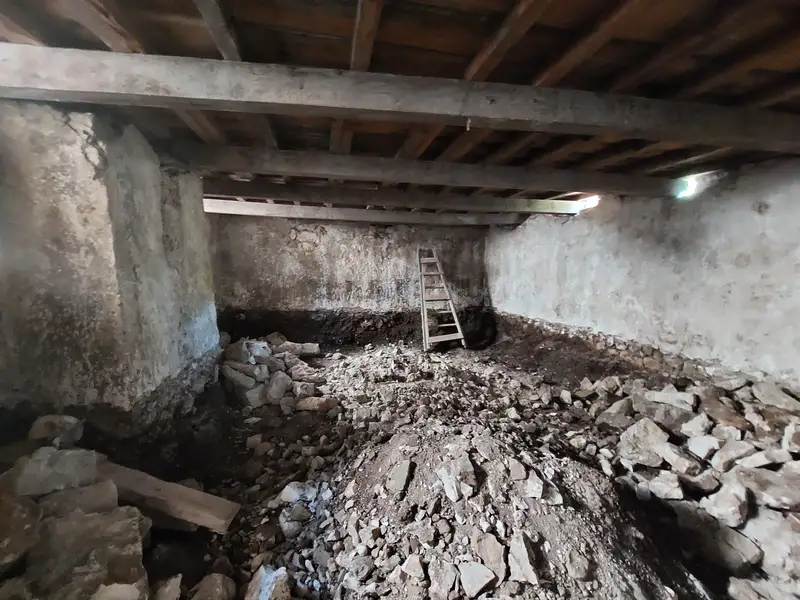
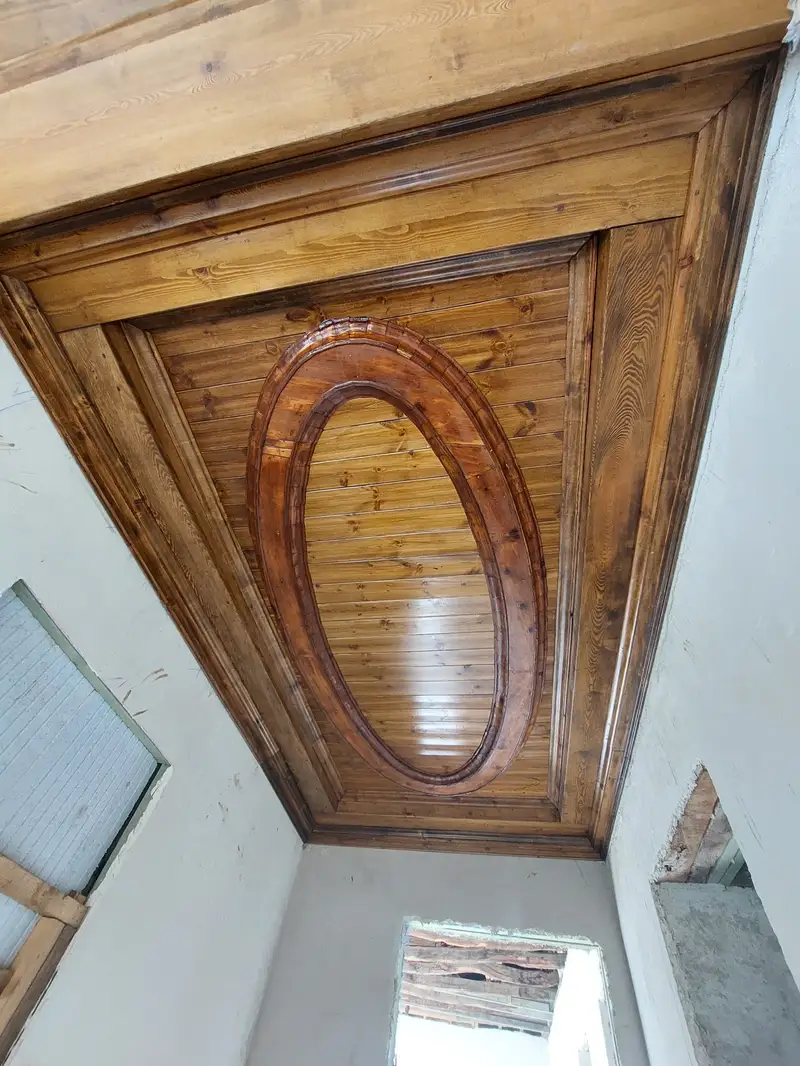
Major structural work advances. The basement vaults — their stone arches intact after more than a century — are excavated and consolidated. Floors are stripped back to their original timber structure. Throughout the building, construction materials accumulate as the scale of the task becomes clear. A remarkable discovery: original wooden ceilings, including a magnificent oval-medallion panel, survive beneath communist-era coverings.

Stone vault 2022 Interior 2022 Basement 2022
2023
August — Craftsmanship Phase

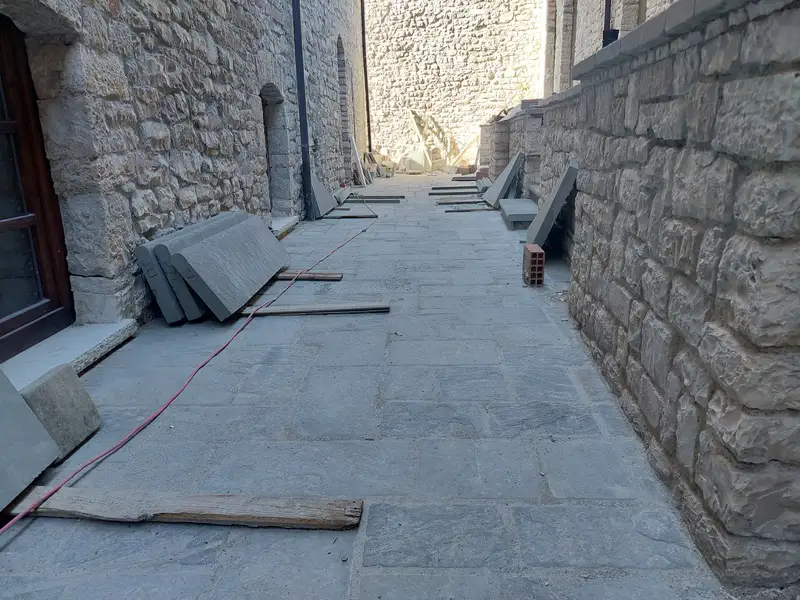
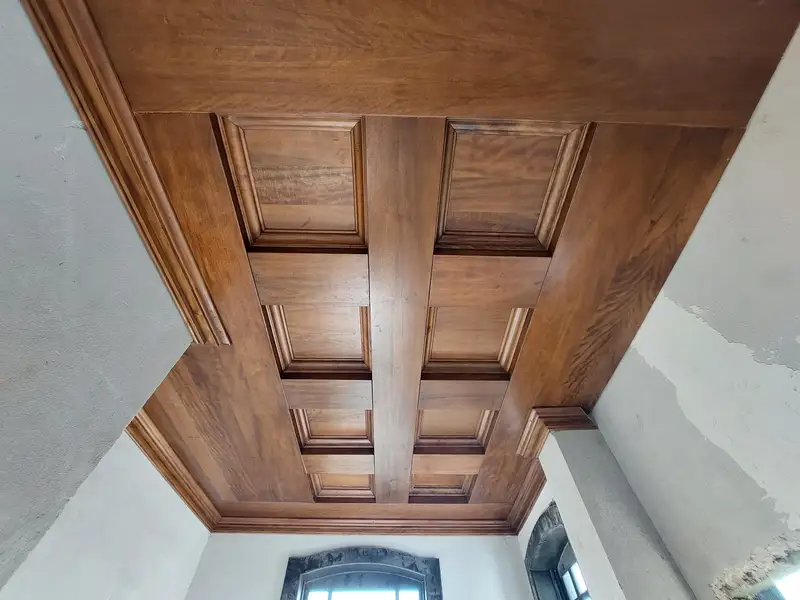
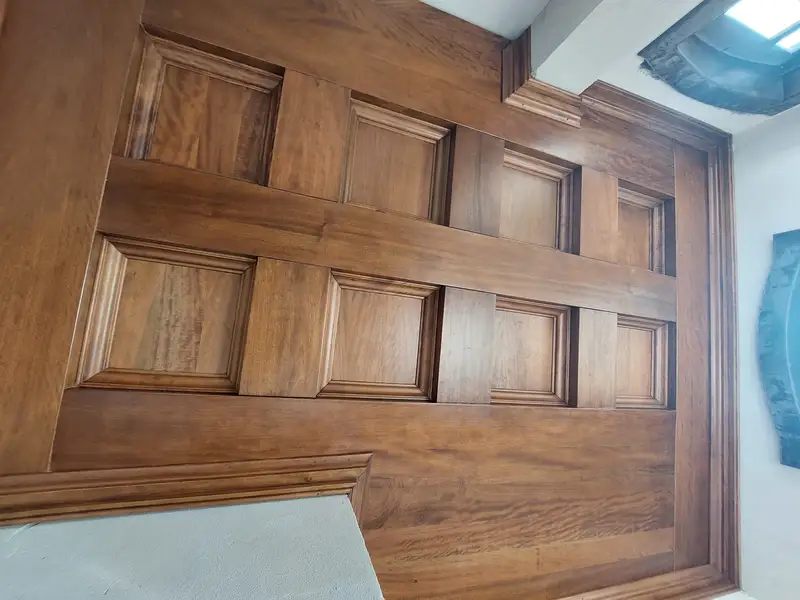
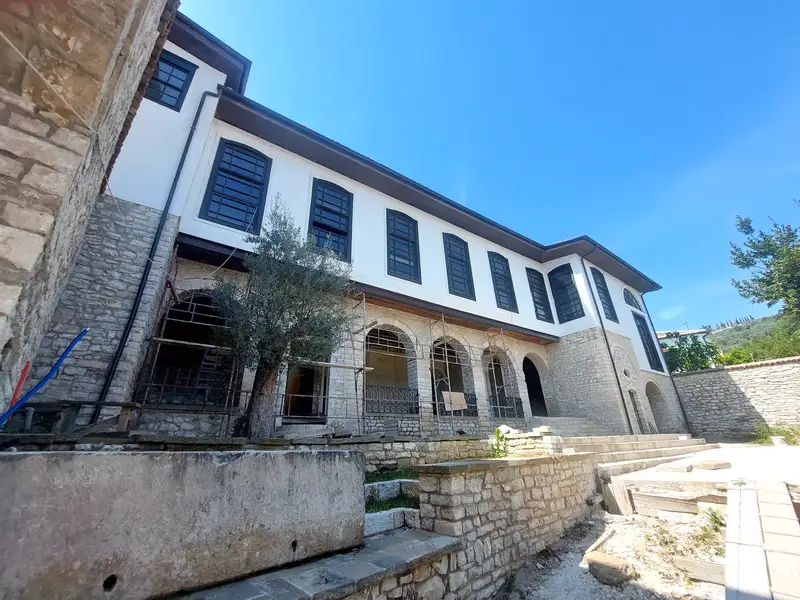
The stone outbuilding — a traditional Albanian konak — takes shape with extraordinary clarity. Local craftsmen lay dressed limestone paving in the courtyard and fit new arched windows of dark-stained timber, faithful to the originals. In the main building, the restoration of the wooden coffered ceilings reaches a spectacular milestone: room-by-room, intricate hand-crafted panels of richly oiled walnut recreate the original interiors to a standard that would not shame a palace.

Stone wing 2023 Coffered ceiling 2023 Coffered ceiling 2023 Ceiling detail 2023
2025
April — Continuing Progress

Work continues across both the main villa and the outbuildings as finishing work advances room by room. Video documentation captures the current state of the restoration. The vision of a fully completed manor — serving as both a memorial to the Vrioni family's legacy and a living cultural heritage site within UNESCO-listed Berat — draws steadily closer.
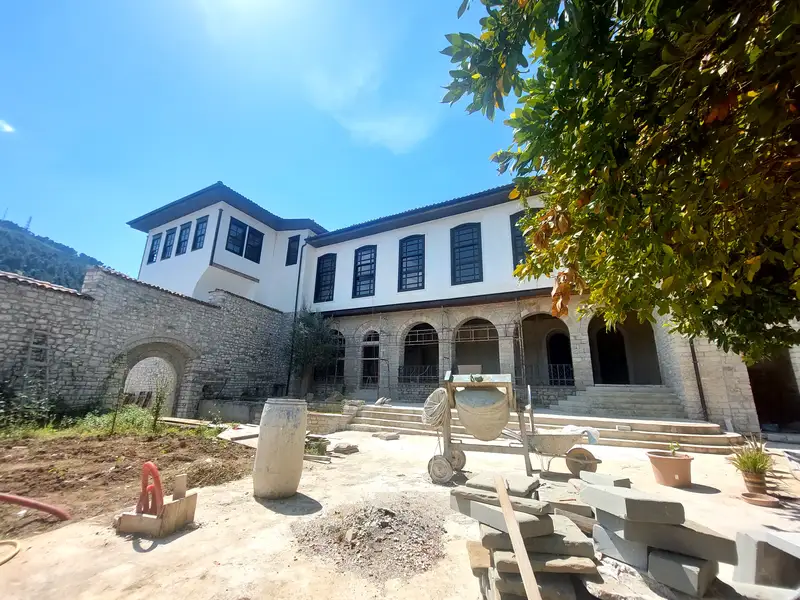
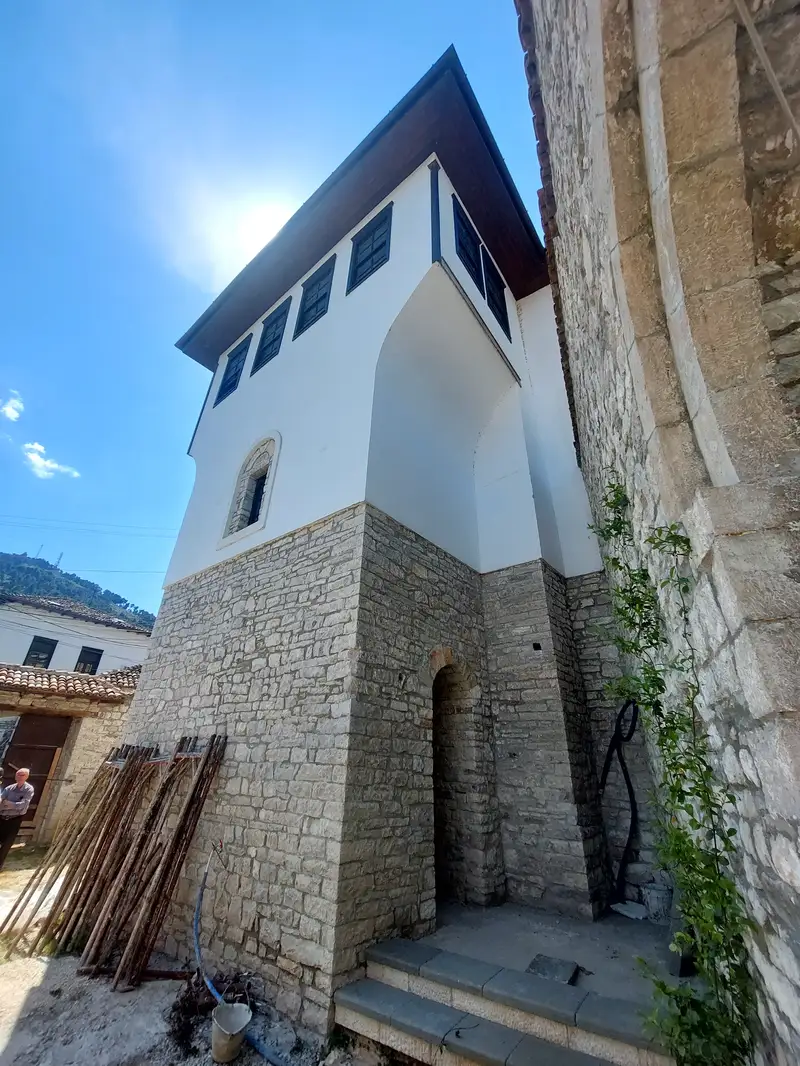
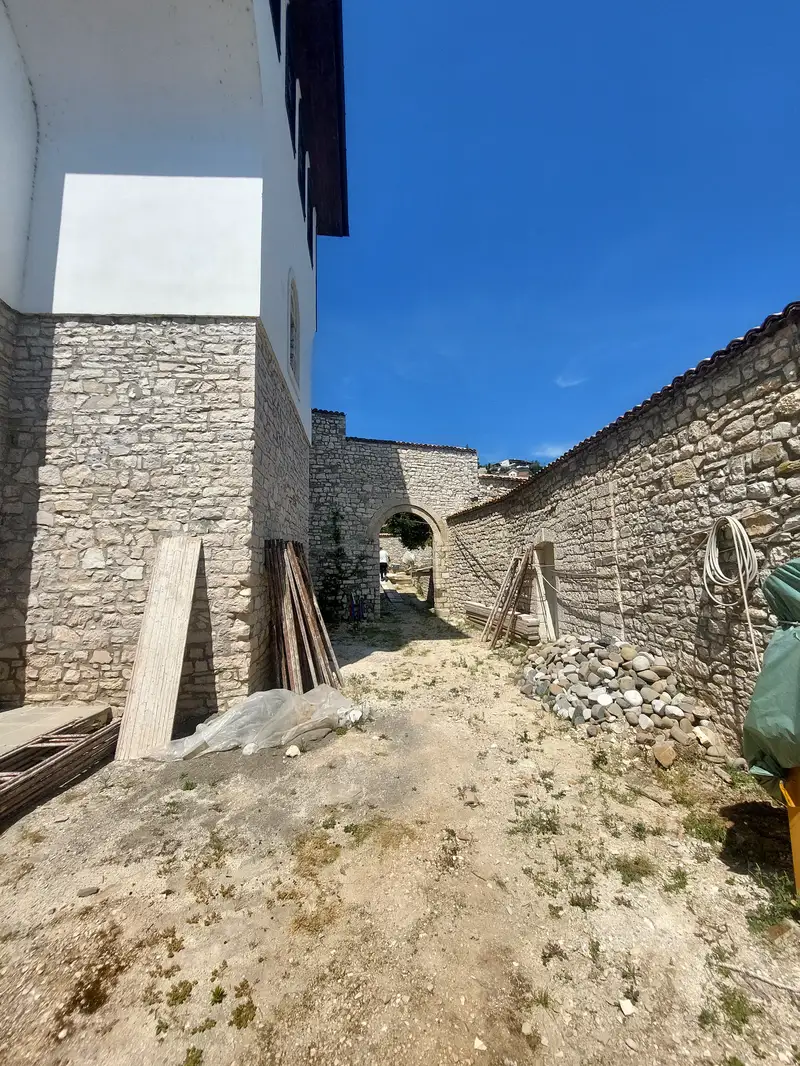
April 2025 April 2025 April 2025 April 2025 April 2025 April 2025 April 2025 April 2025

A Living Heritage

Vila Vrioni is being restored not as a museum piece, but as a living testament to four centuries of legacy — a place where the craftsmanship of the past meets the expectations of the most discerning guests.

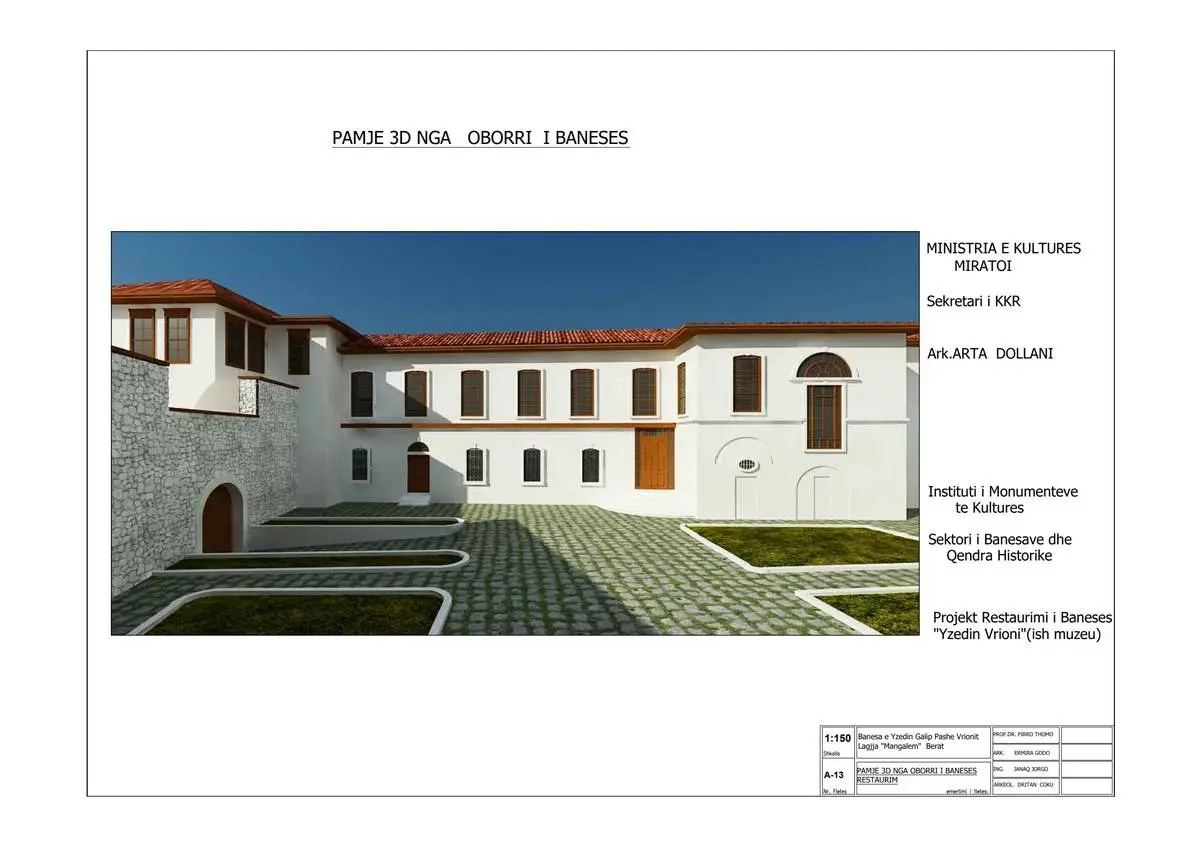
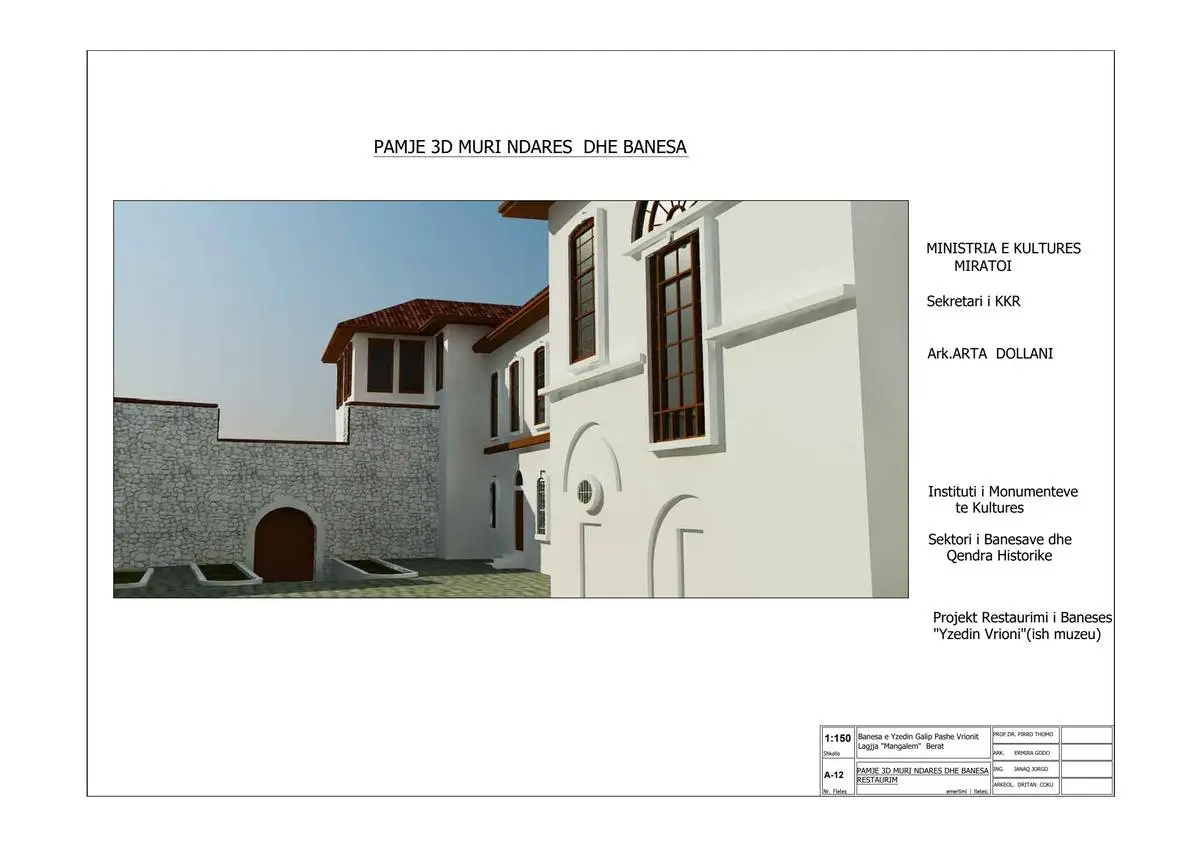
3D architectural rendering of Vila Vrioni courtyard, fully restored
Restoration vision — courtyard view
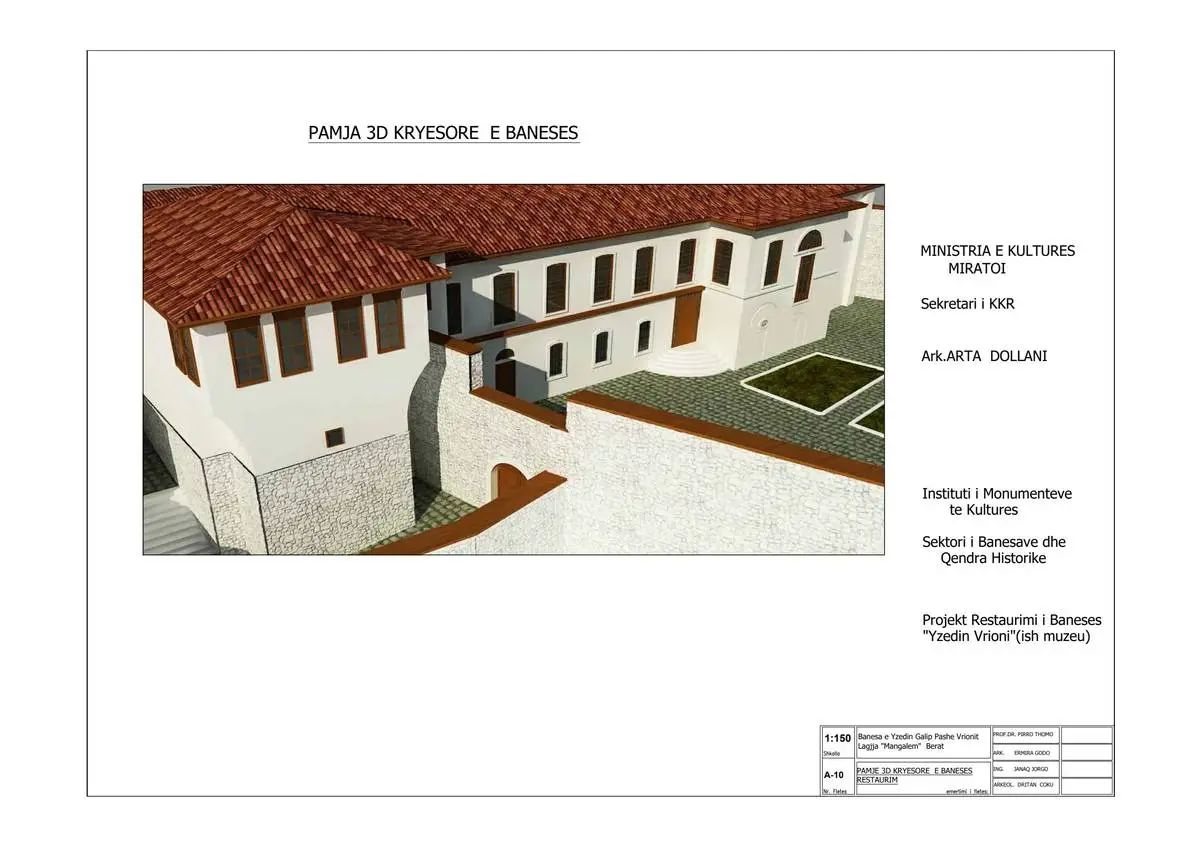
3D aerial rendering of Vila Vrioni compound, fully restored
Restoration vision — aerial view
3D rendering of Vila Vrioni entrance and courtyard
Restoration vision — entrance detail
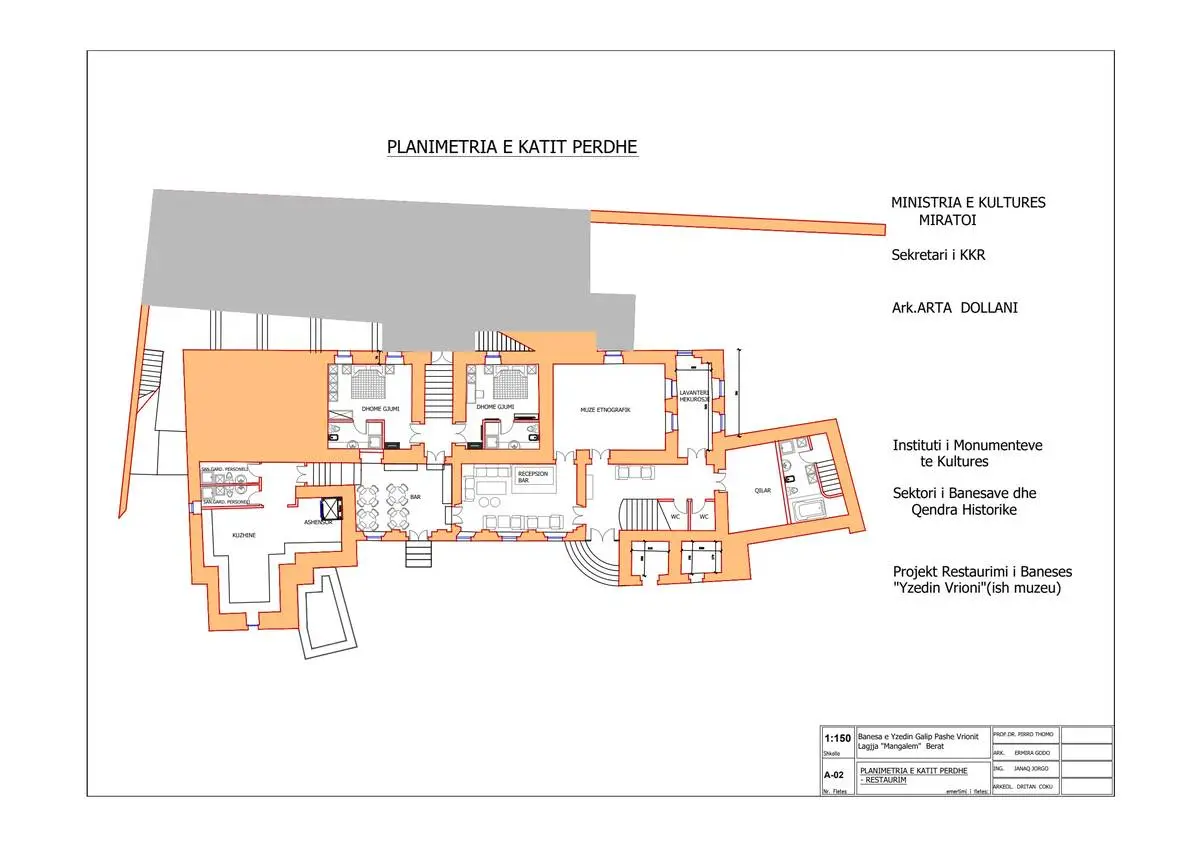
Ground floor restoration plan showing reception, bar, bedrooms, and ethnographic museum
Ground floor masterplan
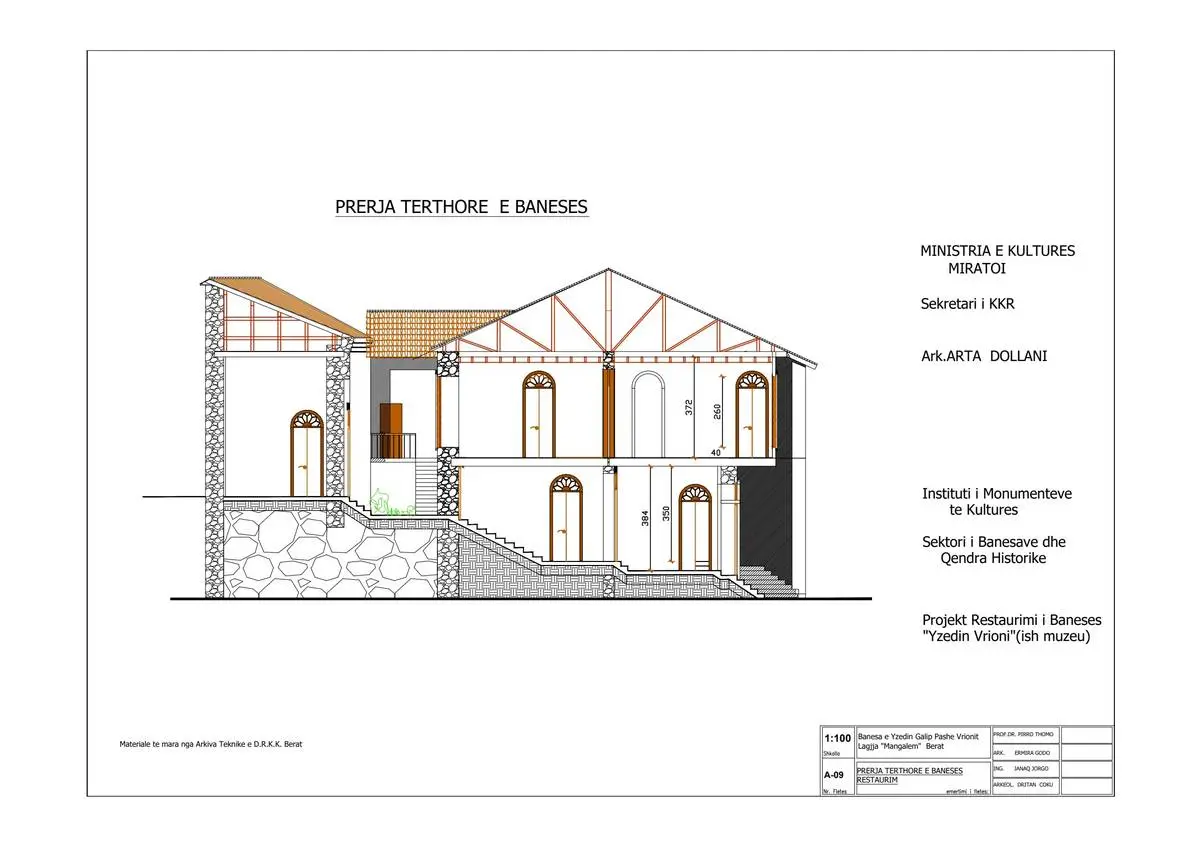
Cross-section showing interior structure and vault system
Architectural cross-section
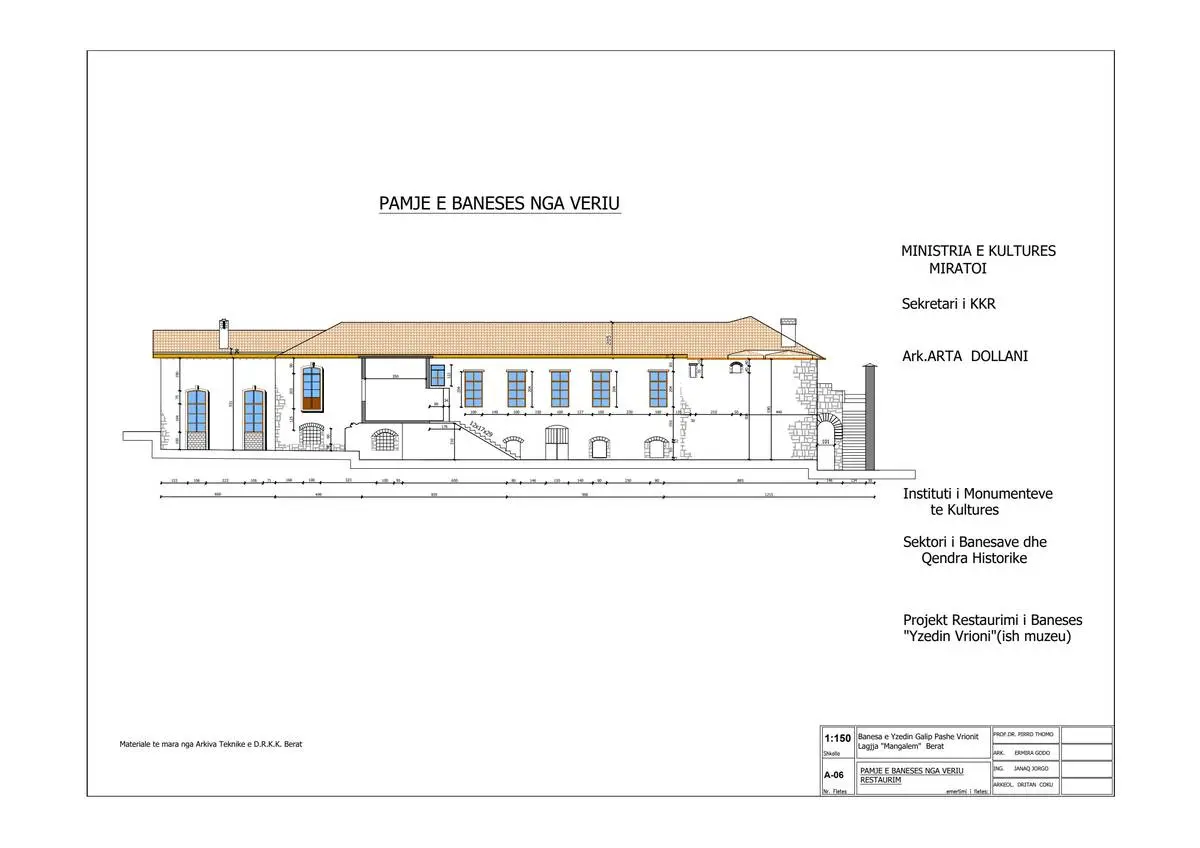
North facade elevation — architectural restoration drawing
North facade elevation

The Architecture

  • Stone barrel vaults and arched konak from the Ottoman period
  • Hand-carved walnut coffered ceilings, restored by master craftsmen
  • Limestone courtyard returned to its original form
  • Two-storey compound with vaulted outbuildings

The Heritage

  • Four centuries of the Vrioni dynasty — Ottoman generals, Prime Ministers, signatories of Albanian independence
  • Official Protected Cultural Monument of Albania
  • Located in Berat's historic quarter, within the UNESCO World Heritage zone
  • European Court of Human Rights recognition (2009)

The Setting

  • Berat: the City of a Thousand Windows, UNESCO World Heritage since 2008
  • One of the last undiscovered corners of the Mediterranean
  • Albania's ancient heartland — mountains, rivers, Ottoman and Byzantine layers
  • Two hours from Tirana; direct flights from across Europe

The Hotel

  • 13 exclusive guest rooms and suites across two restored heritage buildings
  • Hamam — Ottoman-era Turkish bath restored as a private spa
  • Restaurant and bar with courtyard dining
  • Ethnographic museum celebrating Vrioni and Berat heritage
  • Kulla e çajit — the historic tea tower, reimagined as a private lounge
  • Professional kitchen, laundry, reception, and full service infrastructure
13
Guest Rooms
1,364
Total Plot
540
Built Area
824
Courtyard

For partnership and investment enquiries, please get in touch.

Private Enquiries

Enquire

Whether you are interested in a stay, a private event, a partnership, or simply the story — we welcome your enquiry.

Listing links coming soon

or enquire directly